
Revolutionizing Tomorrow: Exploring the Thrilling Landscape of Future Technology

In the ever-evolving realm of technology, the future promises to be nothing short of awe-inspiring. With each passing day, breakthroughs and innovations are reshaping our world, bringing us closer to a future once only dreamed of in science fiction. From the realms of artificial intelligence and biotechnology to space exploration and sustainable energy solutions, the horizon of possibilities seems limitless. Let’s embark on a journey of imagination and exploration as we delve into the exciting landscape of future technology.

1) Artificial Intelligence: Beyond Human Imagination

Imagine a world where machines are capable of not just imitating, but truly understanding human intelligence. Artificial Intelligence (AI) has already shown remarkable potential, from personal assistants like Siri and Alexa to self-driving cars and advanced medical diagnostics. But what lies ahead is even more extraordinary. As AI continues to advance, we can expect to witness machines that can reason, learn, and adapt, paving the way for truly autonomous systems. The fusion of AI with other fields like robotics and healthcare holds the promise of revolutionizing industries and reshaping the very fabric of our daily lives.
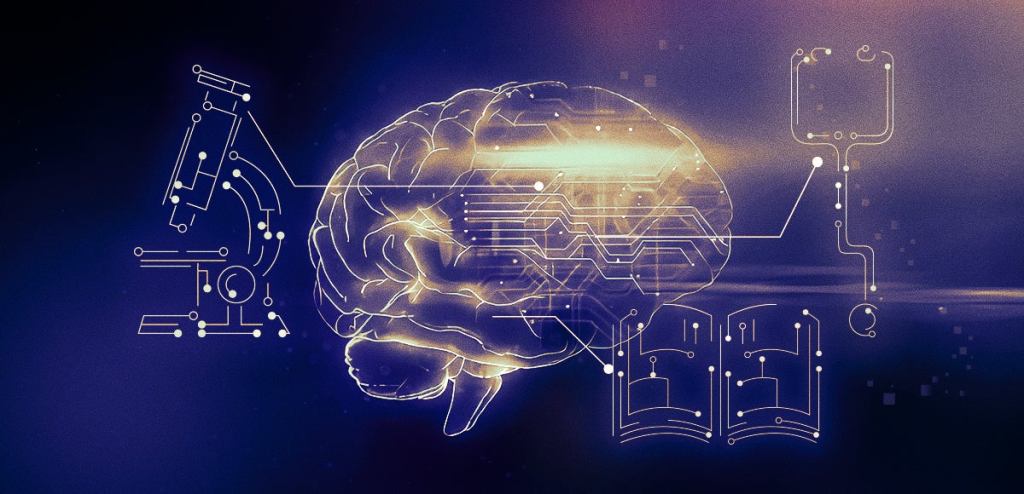
2)Biotechnology and Health: Mastering the Code of Life The intersection of technology and biology is leading us into a future where we can not only treat diseases but enhance human capabilities. CRISPR-Cas9, a groundbreaking gene-editing tool, offers the potential to modify genetic material, curing inherited disorders and potentially preventing them altogether. Personalized medicine, where treatments are tailored to an individual’s genetic makeup, is becoming a reality. The future of health tech might involve nano-scale robots performing surgeries or even regenerating damaged organs. The boundary between man and machine is blurring, and the era of biohacking and human augmentation is dawning.

3) Space Exploration: Reaching for the Stars As space exploration becomes more accessible, the cosmos is beckoning us to embark on extraordinary journeys. Private companies are racing to make space tourism a reality, allowing civilians to experience the majesty of the universe firsthand. Meanwhile, Mars is no longer just a distant dream; plans for manned missions are being developed. The advancement of propulsion technologies could significantly shorten travel times within our solar system, opening up opportunities for interplanetary colonization and resource exploration. The possibilities are boundless, and the future of space technology holds the promise of discovering new worlds and answering age-old questions about our place in the universe.

4) Sustainable Tech: Forging a Greener Future With the growing concern over climate change, the future of technology is undeniably intertwined with sustainability. Innovations in renewable energy sources, such as solar, wind, and tidal power, are gaining momentum. Energy storage solutions are evolving to meet the demands of a cleaner grid. Smart cities are being designed to optimize resource usage and minimize environmental impact. From vertical farms to lab-grown meat, technologies are emerging to tackle the challenges of food production sustainably. The convergence of technology and environmental consciousness is leading us toward a future where progress and planetary well-being go hand in hand.

In the grand tapestry of technological advancements, the threads of innovation, imagination, and ambition weave together to create a future that holds the promise of reshaping humanity’s destiny. As we stand on the precipice of tomorrow, it’s crucial to approach these advancements with a blend of excitement and responsibility, ensuring that the benefits are shared by all and that ethical considerations guide our path.

The future is uncharted territory, waiting for the pioneers and dreamers to shape its landscape. As we peer into the horizon of possibilities, one thing is certain: the future of technology is an adventure that will captivate our minds, challenge our perceptions, and redefine the limits of human potential. So, strap in and get ready to witness the unfolding of a new era—one where innovation knows no bounds and the unimaginable becomes reality.


Unveiling the Power of New Technology: Transforming the World as We Know It


Introduction:
In today’s fast-paced world, new technology continues to revolutionize the way we live, work, and interact. From groundbreaking advancements in artificial intelligence to the incredible potential of blockchain and renewable energy, there’s no denying that we are living in an era of unprecedented technological innovation. In this blog, we’ll dive into the exciting realm of new technology, exploring its transformative impact on various sectors and its potential to shape a brighter future.

1. Artificial Intelligence: Redefining Possibilities
Artificial Intelligence (AI) is no longer a concept confined to science fiction; it has become an integral part of our daily lives. AI-powered systems are revolutionizing industries such as healthcare, finance, transportation, and manufacturing. From personalized healthcare diagnostics to autonomous vehicles, AI is enabling remarkable breakthroughs, streamlining processes, and creating new opportunities.

2. Blockchain: Unlocking Trust and Transparency
Blockchain technology has disrupted traditional systems of record-keeping and is transforming industries with its decentralized and immutable nature. Its potential to enhance security, transparency, and efficiency is revolutionizing sectors like finance, supply chain management, and digital identity verification. The adoption of blockchain is paving the way for more secure transactions, reduced fraud, and increased trust in various domains.

3. Renewable Energy: Energizing Sustainability
As the world grapples with the need for sustainable energy solutions, new technologies are leading the way towards a greener future. Solar power, wind energy, and advanced energy storage systems are revolutionizing the energy landscape. These innovations are not only reducing our dependence on fossil fuels but also opening up new possibilities for clean, renewable energy sources that can power our homes, businesses, and cities.

4. Internet of Things (IoT): Connecting Our World
The Internet of Things is creating a hyper-connected world where everyday objects are interconnected and can communicate with each other. Smart homes, wearable devices, and industrial IoT applications are transforming the way we live, work, and interact. IoT technologies enable greater automation, efficiency, and data-driven decision-making, leading to improved productivity and enhanced quality of life.

5. 5G and Beyond: Empowering Connectivity
The advent of 5G technology is set to revolutionize the speed and reliability of wireless communication. With ultra-low latency and high bandwidth, 5G networks will unlock new opportunities for industries such as autonomous vehicles, remote healthcare, immersive virtual reality experiences, and smart cities. The possibilities seem endless as this advanced technology connects people, devices, and businesses at unprecedented speeds.

Conclusion:
New technology is reshaping our world, propelling us into a future that was once unimaginable. From the realms of AI, blockchain, and renewable energy to the connectivity of IoT and the transformative power of 5G, these advancements hold immense potential to solve complex challenges, drive innovation, and improve our quality of life. Embracing these technologies opens doors to a world of possibilities, where we can collectively forge a sustainable, efficient, and connected future. As we stand at the precipice of this technological revolution, let us harness its power responsibly, fostering a future where technology serves as a force for good, empowering and uniting us all.

Remember, this is just a starting point, and you can customize and expand upon the ideas presented to align with your website’s focus and tone.

Artificial Intelligence for Human Betterment: Exploring the Potential of AI in Healthcare, Education, Environment, and Beyond”

Artificial Intelligence (AI) has the potential to significantly improve human existence in a variety of disciplines. Here are several examples:

1)Healthcare: AI may be used to create prediction models for illness diagnosis and prevention. AI-powered systems can scan medical photos to find anomalies and aid in proper diagnosis. AI may also help with drug development, clinical trials, and customised medicine.

2)Education: AI can increase educational quality by delivering individualised learning experiences. AI-powered tutors may assess student performance and adjust teaching techniques accordingly. AI may also aid with grading, plagiarism detection, and curriculum development.

3)Finance: Artificial intelligence can help with financial decision-making and risk management. Large volumes of financial data may be analysed by AI to find trends and make forecasts.

4)Entertainment: Artificial intelligence (AI) may improve entertainment experiences by making tailored suggestions for music, movies, and TV shows. Artificial intelligence may also be utilised to produce realistic virtual reality experiences.

5)Transportation: AI can optimize traffic flow, reduce accidents, and improve fuel efficiency. Self-driving cars and drones are being developed using AI to provide safer and more efficient transportation

.6)Environment: AI can help to monitor and protect the environment. AI can analyze satellite data to track deforestation, monitor air and water quality, and predict natural disasters.

Overall, AI has the potential to significantly improve human lives in a variety of disciplines, and it is critical to continue researching its potential for human benefit.
Here are some additional examples of how AI can be used for the betterment of human beings:

a)Agriculture: AI can help farmers to optimize crop yields by analyzing soil conditions, weather patterns, and crop growth data. AI can also assist with pest detection and crop disease diagnosis.

b)Mental Health: AI can assist in the detection and treatment of mental health issues. AI-powered chatbots and virtual assistants can provide emotional support and counseling to people who are struggling with mental health issues.

c)Smart Homes: AI can make homes more efficient and comfortable. AI-powered smart home devices can optimize energy consumption, monitor home security, and adjust home appliances according to user preferences.

d)Customer Service: AI can improve customer service by providing personalized recommendations and assistance. AI-powered chatbots can provide 24/7 support to customers and help businesses to reduce response times.

e)Space Exploration: AI can assist with space exploration and research. AI can analyze large amounts of data from space missions to improve our understanding of the universe.

f)Disaster Response: AI can help with disaster response by predicting the path and impact of natural disasters. AI-powered drones and robots can also be used for search and rescue operations.

g)Social Justice: AI can be used to promote social justice by analyzing patterns of discrimination and bias. AI can help to identify and eliminate discriminatory practices in hiring, housing, and lending.

e)Space Exploration: AI can assist with space exploration and research. AI can analyze large amounts of data from space missions to improve our understanding of the universe.

f)Disaster Response: AI can help with disaster response by predicting the path and impact of natural disasters. AI-powered drones and robots can also be used for search and rescue operations.

g)Social Justice: AI can be used to promote social justice by analyzing patterns of discrimination and bias. AI can help to identify and eliminate discriminatory practices in hiring, housing, and lending.

In summary, AI has vast potential to improve human life in various domains, and it is essential to explore and develop AI applications with a focus on ethical and equitable deployment.


Quantum computing

Quantum computing is a type of computing that performs calculations using quantum mechanics principles. Quantum mechanics is a branch of physics that studies the behaviour of matter and energy at extremely small scales, such as atoms and subatomic particles.


The bit is the basic unit of information in classical computing, and it can be either a 0 or a 1. The fundamental unit of information in quantum computing is the qubit, which can be in a state of 0, 1, or a superposition of both. This means that a qubit can store more data than a traditional bit.
The main benefit of quantum computing is that it can perform certain calculations much faster than traditional computing. Some algorithms, for example, can be run on a quantum computer in fractions of a second that would take billions of years on a classical computer.

Shor’s algorithm is a well-known quantum algorithm that can factor large numbers into prime factors much faster than classical algorithms. Many encryption methods rely on the difficulty of factoring large numbers, so this has significant implications for cryptography.

Grover’s algorithm is another important quantum algorithm that can search an unsorted database much faster than classical algorithms. This is useful in data mining and optimization problems.
Despite the potential advantages of quantum computing, there are also challenges and limitations. One of the most difficult challenges is that quantum systems are extremely sensitive to noise and decoherence, which can lead to calculation errors. Researchers are developing error correction codes and fault-tolerant designs to mitigate these effects.

In summary, quantum computing is a type of computing that uses quantum mechanics principles to perform calculations much faster than traditional computing. Many fields, including cryptography, data mining, and optimization, stand to benefit from it. However, there are some obstacles and limitations that must be overcome before quantum computing can become a viable technology.

“The Future of Technology: Advancements, Opportunities, and Challenges”

With developments in fields like artificial intelligence, virtual and augmented reality, 5G networks, quantum computing, and biotechnology, among others, it is anticipated that the use of new technology will continue to rise in the future. This might have a significant impact on a number of sectors, including healthcare, transportation, entertainment, and education, as well as how people connect with one another and the environment. However, as technology becomes more pervasive in our daily lives, it also poses significant ethical and social issues that must be resolved.
It is anticipated that new technologies will have an impact on a variety of fields and businesses as they continue to develop and emerge. For instance, machine learning and artificial intelligence could revolutionise how we develop new goods, improve supply networks, and identify and cure ailments. A greater degree of connectedness and more effective data transfer may be made possible by the spread of 5G networks and the Internet of Things, opening up new possibilities for applications in fields like autonomous driving and smart cities.The employment of new technology also brings up significant concerns about security, privacy, and the morality of how these technologies are created and used. As a result, it will be crucial for people, businesses, and governments to collaborate in order to make sure that new technologies are utilised in ways that are advantageous to society as a whole.

Artificial intelligence and its future.

Artificial intelligence (AI) refers to the simulation of human intelligence in machines that are programmed to think like humans and mimic their actions. The term may also be applied to any machine that exhibits traits associated with a human mind such as learning and problem-solving.

Artificial intelligence is impacting the future of virtually every industry and every human being. Artificial intelligence has acted as the main driver of emerging technologies like big data, robotics, and IoT, and it will continue to act as a technological innovator for the foreseeable future.
Employing machine learning and computer vision for detection and classification of various “safety events,” the shoebox-sized device doesn’t see all, but it sees plenty. Like which way the driver is looking as he operates the vehicle, how fast he’s driving, where he’s driving, locations of the people around him, and how other forklift operators are maneuvering their vehicles. IFM’s software automatically detects safety violations (for example, cell phone use) and notifies warehouse managers so they can take immediate action. The main goals are to prevent accidents and increase efficiency. The mere knowledge that one of IFM’s devices is watching, Gyongyosi claims, has had “a huge effect.”

If you think about a camera, it is the richest sensor available to us today at a very interesting price point,” he says. “Because of smartphones, camera and image sensors have become incredibly inexpensive, yet we capture a lot of information. From an image, we might be able to infer 25 signals today, but six months from now we’ll be able to infer 100 or 150 signals from that same image. The only difference is the software that’s looking at the image. And that’s why this is so compelling because we can offer a very important core feature set today, but then over time, all our systems are learning from each other. Every customer can benefit from every other customer that we bring on board because our systems start to see and learn more processes and detect more things that are important and relevant.”

Can robots replace humans?

In the future robots will no doubt bring a revolution in the field of modern technology and may some jobs will allot to robots that today enjoy by humans, but some analysts are criticizing this concept and represent few factors, which are given below.

a) The organic nature distinct humans from robots

b) Humans can easily understand the ongoing circumstances and harmonize the stressful situation because of their judging ability but on another hand, robots may not do the same, even by using its artificial intelligence.

c) There are other facets also which are solely limited to human beings, such as ethics, socialism, emotions, sentiments, excitements and beliefs, etc.

The above points make sense but it is a matter of fact, that most countries working for robots technology, and countries such as Japan, Germany Singapore, South Korea, and China, etc already installed robots in the workplace like hotels and other places. In addition to this, Saudi Arabia, taken a step forward when provided citizenship to the humanoid female robot name Sophia in October 2017…

Humans are most likely to replace by robots.

One can hardly ignore the vital role of robots in the near future, because of certain facts.

a) safety issue has been a major concern for human beings in the workplace like industries and construction area, but it is not possible in the case of robots

b)The task of the robot is no doubt more accurate and precise because of fixed software installation but at another hand, a lot of errors exist in the humans duties.

C) As no emotions exist in the robot, so it will not complain to the boss.–The happy employer ever😁..

d) Robot function is to perform the longer work in the short time interval.

* It is crystal clear that robots already starting to get jobs from human beings in the certain field but robots may not be fitted in every sector like administration, judiciary, and social welfare, etc the considerable demerit of robotic work is their restrictions to fixed programming,

Conclusion:

Taking all points into account it may be said, the use of robots will certainly be boosted in the future, and in some areas, robots may replace humans but it does not mean that humans will find no job. As technology does not snatch jobs but creates jobs.

Introduce Yourself (Example Post)

This is an example post, originally published as part of Blogging University. Enroll in one of our ten programs, and start your blog right.

You’re going to publish a post today. Don’t worry about how your blog looks. Don’t worry if you haven’t given it a name yet, or you’re feeling overwhelmed. Just click the “New Post” button, and tell us why you’re here.

Why do this?

  • Because it gives new readers context. What are you about? Why should they read your blog?
  • Because it will help you focus your own ideas about your blog and what you’d like to do with it.

The post can be short or long, a personal intro to your life or a bloggy mission statement, a manifesto for the future or a simple outline of your the types of things you hope to publish.

To help you get started, here are a few questions:

  • Why are you blogging publicly, rather than keeping a personal journal?
  • What topics do you think you’ll write about?
  • Who would you love to connect with via your blog?
  • If you blog successfully throughout the next year, what would you hope to have accomplished?

You’re not locked into any of this; one of the wonderful things about blogs is how they constantly evolve as we learn, grow, and interact with one another — but it’s good to know where and why you started, and articulating your goals may just give you a few other post ideas.

Can’t think how to get started? Just write the first thing that pops into your head. Anne Lamott, author of a book on writing we love, says that you need to give yourself permission to write a “crappy first draft”. Anne makes a great point — just start writing, and worry about editing it later.

When you’re ready to publish, give your post three to five tags that describe your blog’s focus — writing, photography, fiction, parenting, food, cars, movies, sports, whatever. These tags will help others who care about your topics find you in the Reader. Make sure one of the tags is “zerotohero,” so other new bloggers can find you, too.

Introduce Yourself (Example Post)

This is an example post, originally published as part of Blogging University. Enroll in one of our ten programs, and start your blog right.

You’re going to publish a post today. Don’t worry about how your blog looks. Don’t worry if you haven’t given it a name yet, or you’re feeling overwhelmed. Just click the “New Post” button, and tell us why you’re here.

Why do this?

  • Because it gives new readers context. What are you about? Why should they read your blog?
  • Because it will help you focus your own ideas about your blog and what you’d like to do with it.

The post can be short or long, a personal intro to your life or a bloggy mission statement, a manifesto for the future or a simple outline of your the types of things you hope to publish.

To help you get started, here are a few questions:

  • Why are you blogging publicly, rather than keeping a personal journal?
  • What topics do you think you’ll write about?
  • Who would you love to connect with via your blog?
  • If you blog successfully throughout the next year, what would you hope to have accomplished?

You’re not locked into any of this; one of the wonderful things about blogs is how they constantly evolve as we learn, grow, and interact with one another — but it’s good to know where and why you started, and articulating your goals may just give you a few other post ideas.

Can’t think how to get started? Just write the first thing that pops into your head. Anne Lamott, author of a book on writing we love, says that you need to give yourself permission to write a “crappy first draft”. Anne makes a great point — just start writing, and worry about editing it later.

When you’re ready to publish, give your post three to five tags that describe your blog’s focus — writing, photography, fiction, parenting, food, cars, movies, sports, whatever. These tags will help others who care about your topics find you in the Reader. Make sure one of the tags is “zerotohero,” so other new bloggers can find you, too.